The ERIC program: emotional skills for life’s challenges
Emotional regulation is something most of us struggle with at different times, especially when we are young. “We know that adolescence is a period of time where you have less agency, drivers that differ from adults and there are more developmental changes going on,” says Kellie Ferris, Senior Trainer and Practice Consultant at YSAS.
“For our young people at YSAS who have often had trauma and too few opportunities to meet their needs, the challenges can be many.” The ERIC program – which stands for Emotional Regulation and Impulse Control – supports young people in managing emotions and impulsivity and making decisions. It’s designed for young people with a range of mental health and drug and alcohol concerns.
Kellie says the program, which was created in partnership with Deakin University and YSAS, brings together over 20+ strategies, including motivational interviewing, DBT and compassion-focused therapies. “It was a big collaborative piece that drew on lots of experience to inform something that offers flexibility”.
“We are never saying that the feelings are not to be felt, or are not okay,” says Kellie. “What we’re saying is there’s a bunch of different tools and ways that you can respond to those feelings that might have more desirable results.”
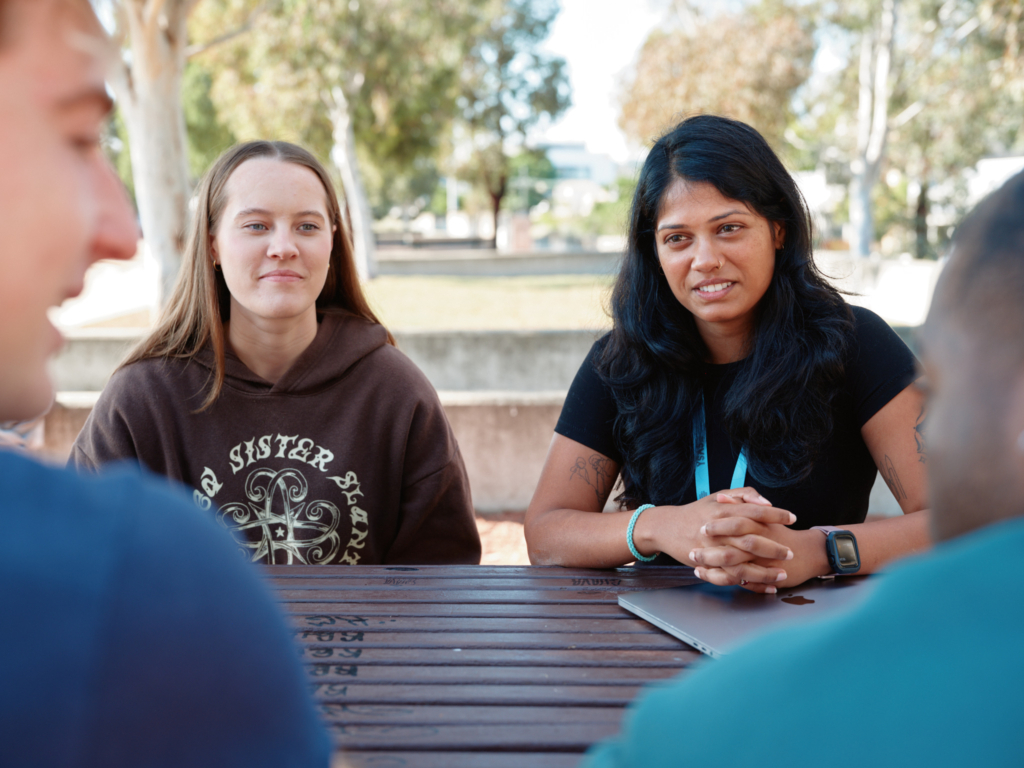
There are two main elements of the program. “One is addressing those feelings at the time and supporting people to respond to those feelings,” Kellie says.
“And the other part is about understanding yourself and what your core beliefs are. It’s looking at values, and how you want to behave in the world in a way that reflects those values.”
It can be used as a traditional group program, in one-on-one sessions, or in residential settings. “You can take a conversational approach, dealing with something in the moment,” Kellie says. “Or you can have quite a complex conversation about something that deals with bigger picture things.” The program is structured into modules so young people can build on their knowledge progressively.
Kellie particularly likes group work with ERIC. “There’s something about groups that offers young people something workers sometimes can’t offer, like peer-based connection,” she says. Creating dedicated spaces separate from day-to-day operations is important. “It can be a really good opportunity for us to get to know just how reflective, intelligent and insightful our young people are. Without those moments, we can miss those bits that demonstrate what a lot of their strengths are.”
Ultimately, the ERIC program supports young people to live in a way that’s more connected to their values.
“I think for all of us, if we don’t have the skills, tools and capabilities of sitting with discomfort, we can’t put our full minds to making decisions that align with our values,” she says.
What young people who’ve done ERIC say:
- “Anger tells me something needs to stop.”
- “It’s good to pull it apart to look at what the urge actually is. It’s not to use, it’s much deeper than that.”
- “It makes sense as to why I feel like that and how it’s not necessarily a bad thing. It’s about when it’s useful.”
- “I work in a shop and sometimes I want to leave because I’m getting stressed. I can see that just counting the number of things someone gets might help me distract and do my job at the same time.”
- “I haven’t even thought about my bigger dreams. I’m always just stuck in SMART goals and going to Centrelink. I need to think more about the big picture and what I want. It’s like I’ve forgotten to do that, this is really good to think about.”