Bringing Families into the Conversation YSAS Community of Practice
When Traineeship Coordinator Esther Benz first began as a youth worker, she remembers not feeling confident working with family members. “I really learnt along the way, and I learnt the most from family members themselves and the loved ones of young people,” she says.
So when she and Senior Trainer Kellie Ferris were asked to put together regular professional development for staff, they knew they wanted to focus on families, carers and those close to young people. “It should be part of everything that we’re doing and considering when we work with young people,” Esther says.
When working at YSAS’s Youth Drug and Alcohol Advice service (YoDAA) , Kellie says workers would often call her about their work with families. “I would hear about their work, or they just wanted to throw an idea around,” she says. “And I thought, everybody needs to hear what great work this person’s doing.”
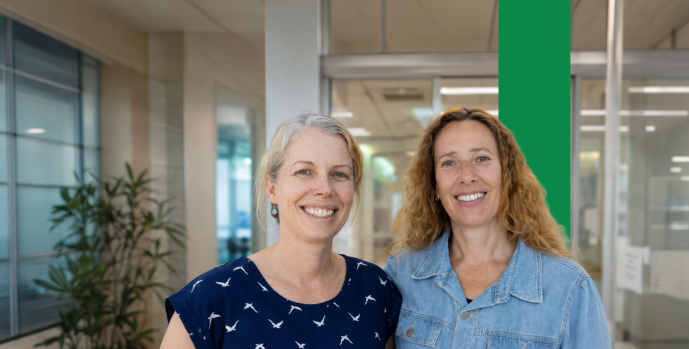
And so the YSAS Family and Community: Community of Practice was born. It’s a monthly online meeting for staff, family members, young people and partner organisations, where the group discusses a wide range of topics including harm reduction, stigma and isolation, and concepts such as ‘unconditional love’ and ‘normal parenting’.
“It’s really honouring that we’re just in the young person’s life for a short period of time,” Esther says.
“That they have ways to become the person that they want through relationships with others, throughout their whole life journey.”
Kellie says the space aims to centre the wisdom of family members and young people by bringing their perspectives into the discussion. “It also includes the ways and ideas that might arise from working with different communities.”
At its core, the space is about learning together. “Learning isn’t always from books or training or professionalised knowledge,” Esther says. Kellie agrees. “I’ll hear a perspective from somebody that I really align with,” she says, “and then somebody says something that’s a different way of looking at it, and I think ‘oh, actually, good point, now I’m not sure’”.
Youth Worker Laura Slink wasn’t sure what to expect when she first joined a Community of Practice session, but she quickly found them invaluable. “It’s like a large reflective practice,” she says. “I can take some part of conversations and little reminders of best practice, and then go out to appointments and implement them.”
Laura remembers a particular Community of Practice session on Child Protection, during which she was working with a mother whose young child had been removed from care. “I was able to get some ideas off people in that meeting, and that helped me develop a plan moving forward,” she says.
A Youth Peer Advocate who attended a Community of Practice says the session made her feel hopeful. “As a young person myself, it’s really great to know there are people out there that exist and give a channel for [young people] to communicate with family when it gets really hard.”
Esther hopes the space will continue to evolve and improve over time. “It really can be a space where people can put forward very differing views, but where all is valid and heard,” she says.
“Because we all do agree on one thing, and that is that we care about the lives and futures of the young people that we’re here to work with.”