Making Every Session Count at headspace Collingwood
Two years ago, the team at headspace Collingwood were puzzled by one piece of data. Their mental health clinicians were spending huge amounts of time assessing young people — sometimes over several months — to prepare them for a standard course of six counselling sessions. This approach was blowing out wait times, with young people waiting an average of 87 days to see a clinician.
But the research revealed something stark: most young people were attending just one session.
Clinical Team Leader Damian Philp says that single data point sparked a major overhaul of how the centre works. “The idea is, if they’re here for just one session, how can we be most helpful?” he says.
Enter the Single Session Model. Within two to three weeks of referral, young people can now access a single 90-minute session with a clinician. Damian says the focus is on one or two key issues, and on providing practical, tangible skills to address them.
“We ask the young person: if we’ve only got time to talk about one thing today, what’s that thing?” he says.
“I think the model really aligns with putting young people at the centre of care,” says Centre Manager David Hay. He says it works particularly well for young people experiencing situational stress — such as issues at school, with family or with peers — who need immediate support. “Only about 10 per cent really need that level of comprehensive history that can take months to collect,” he says. “And from a trauma-informed perspective, assessment for assessment’s sake isn’t helpful.”
The Single Session Model isn’t designed to replace brief interventions — quite the opposite. Young people at headspace Collingwood can still access ongoing counselling, either through multiple single sessions or a block of six brief intervention sessions. Every single session also includes a follow-up phone call, in which the clinician and young person discuss next steps. “There’s still therapy that happens over a long time, and there’s still a lot of value in that,” says Senior Clinician Liam O’Neill.
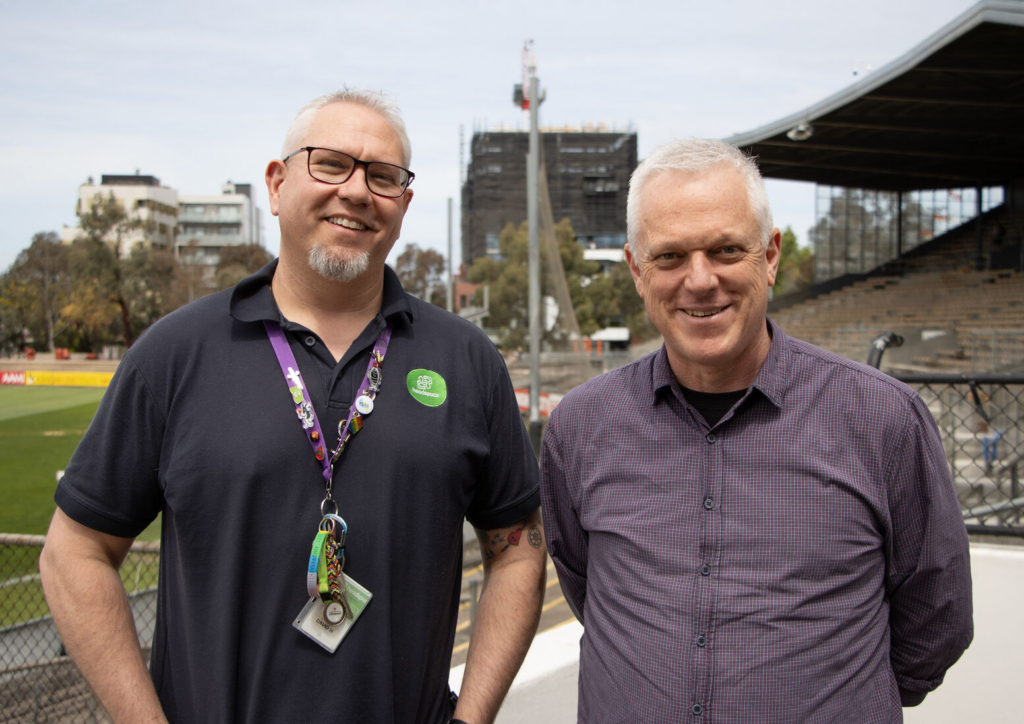
Getting the new model up and running wasn’t without its challenges. “With any change comes a bit of resistance,” Liam says. David adds that the idea of a single session challenges what many clinicians are taught at university about the value of ongoing therapy. In response, the leadership team invested significant time in talking through the change with staff, including a full day at headspace Frankston. “It was about unpacking the myths and preconceptions around single sessions,” David says, “and listening to the doubts, and working through them together.” He says collaborating with headspace Frankston, which already uses the Single Session Model, was key to getting the project off the ground.
Liam has seen firsthand how effective the model can be.
“It works because we’re able to get into the work much sooner, and that feels good for both the client and the clinician.”
He recalls one young person, Sam*, who had a long history of mental health support — the kind of client who would previously have taken months to assess. Instead, three weeks later, Sam was in a single session with Liam, talking about how they were doing well overall but wanted help creating a plan around exercise and socialising, which helped manage their anxiety. “We spent an hour and a half celebrating wins and setting up a maintenance plan,” Liam says. “They walked out feeling really validated.”
Sam isn’t alone. In the first three months of the Single Session Model, young people rated their satisfaction at around 9 out of 10, with many leaving positive comments. “I was really happy with how easy the session was to access,” said one. Another wrote: “I found the single session very helpful, not only in addressing the situation I wanted to work on, but also in acknowledging other factors contributing to my wellbeing.” “The feedback was glowing,” Damian says, “ and hearing the client voice so clearly was incredibly powerful.”
David says the model has been so successful that headspace Collingwood has received additional funding to expand the program. “We’ll bring on two new access workers, which will allow us to have dedicated single session champions,” he says. The team is also committed to formally reviewing the program for at least three months each year.
“It’s been such a success,” David says, “and we really want to make sure we can sustain it and keep improving.”
*name has been changed.